June 16, 2008
“We have seen and we will continue to see a wide range of ambiguous threats in the shadow area between major war and millennial peace. Americans must understand … that a number of small challenges, year after year, can add up to a more serious challenge to our interests. The time to act, to help our friends by adding our strength to the equation, is not when the threat is at our doorstep, when the stakes are highest and the needed resources enormous. We must be prepared to commit our political, economic, and if necessary, military power when the threat is still manageable and when its prudent use can prevent the threat from growing.”
In light of this thought, we waited too long to deal with Iraq, and that caused the problems we've had up until recently.
Americans are not being led to understand the true nature of our national security needs.
Oh, who said this quote? And when?
Read More "About Iraq" »Show Comments »
April 15, 2008
I'm still pleased we deposed Saddam. I do not think it was a mistake by any possible definition of the word.
I think we did a fair job of preparing for the aftermath. If our President made a mistake in planning for the post-Saddam situation, it was in thinking that the Left/Liberals of the world and the Democrats in the US would help instead of actively resisting and doing everything they could to mess it up.
I know I never would have expected that the Liberals would prefer people to die in terrorist acts rather than admit Bush was correct.
And I think we are very close to establishing a lasting peace there.
It may have taken longer than the short-attention-spanned, instant-gratification, and/or power-hungry insisted, but this has been a realistic development arc. Just look at how long it took the British to successfully deal with the Irish insurgency on their own territory.
Show Comments »
March 29, 2008
January 18, 2008
Bonus question: Of the people most likely to be bothered by the original language, which party do you think they'd most likely vote for?
Show Comments »
November 14, 2007
I'm breaking my self-imposed shift away from political posting to bring you this gem from Grayhawk.
Read the whole thing. I mean it.
Show Comments »
August 21, 2007
But sometimes ya gotta:
Enjoy!!!
Show Comments »
August 14, 2007
...but the good General is wrong.
We need all the services, and we need all the services doing what we're doing. You can't win the support of Sheikhs from 25k feet. And who, exactly, will be down there on the ground clearing out all the MANPADS systems, hmm? I'll give you a hint: Army and Marines. So you might as well let them do the rest of the job.
Yes, the USAF does a great job safely killing targets you can fix and locate. They don't do so well with insurgencies and terrorists.
Show Comments »
August 09, 2007
Personal motor vehicles are only a very small fraction of overall oil consumption, but in any case, the overall growth of personal motor vehicle ownership is greater than any possible incremental reduction of consumption by changing habits in the US.
That being said, I seek the best fuel economy in my vehicles; however it is because I hate wasting money on fuel that can otherwise be avoided. I'm not trying to save the world with my car purchase.
Show Comments »
June 19, 2007
Even the mainstream news media is finding it difficult to ignore reports of success.
To remind you, this is what I said just last December, when everyone else was saying things looked bleak and even many original war supporters were jumping off the (admittedly pretty empty) bandwagon.
I've always been on the bandwagon that we hadn't come close to losing, but might need to readjust strategy.
I'm one of the last, true warbloggers (even if I don't blog about war much).
In fact, I've been blogging since early October 2002. I expect a cake and a party when Brain Fertilizer turns 5, okay?
Or at least a darn good wikipedia entry.
Show Comments »
April 03, 2007
No kidding. You must read this.
A few of my favorite points:
Perhaps cliche to note, but it's ironic that some of the most natural expression of racial and cultural equality is found in a traditionally insensitive and conservative military culture. In my experience, marines and soldiers don't care where you're from, they don't care what color you are and they (mostly) don't care if you've got annoying habits or speak with a funny accent.If a team member pulls his weight, they'll accept and protect him as only (particularly well-armed) family can ... while good-naturedly eviscerating him for all of the above traits.
True dat.
And:
Even the generically welcome "let's support the troops" mantra rang hollow from many quarters, because, in reality, what were most folks actually doing for the conflict? Many offer support on a superficial level, but interest in even sacrificing a few minutes reading about Iraq is on the wane.
You have to read the whole thing to get the important context of the above statement. There's alot of good stuff to think about in what Bill writes, I don't want to steal his thunder by putting all of it here.
Show Comments »
December 07, 2006
I've been feeling this for some time, but couldn't find a good way to say it.
I still believe we're winning the war in Iraq, despite the best efforts of the information campaign being waged with complicity of our own news media to destroy our morale. But thanks to the said domestic and international news media, we are losing ground somewhat.
It can still be won...but a self-fulfilling prophecy can still take us to a loss.
I feel like all of my efforts (30 months of deployment time) and the efforts of all my brothers in arms are all for naught. I thought old people were supposed to be more patient than a 24 year old but apparently I have more patience for our victory to unfold in Iraq than 99.9 percent of Americans. Iraq isn’t fast food--you can’t have what you want and have it now. To completely change a country for the first time in its entire history takes time, and when I say time I don’t mean 4 years.
Show Comments »
December 04, 2006
November 28, 2006
It's possible. Nay, it's probable.
AP has been using a stringer for months to report false atrocities.
An agenda is being pushed that does not benefit the U.S., its citizens, or its soldiers. It seems to only benefit Democrat politicians and the news media.
The Democracy Project has more:
There’s, also, little reason to doubt that much of the reporting we’re getting, which is feeding despair among many Americans, is unreliable. The major media has not been forthcoming about its reporting practices, so we are left in the dark with our -- possibly excessive, but definitely debilitating – fears.The major media’s failure to examine itself and to share that with its customers is nothing short of malfeasance of the highest order. The media’s influence on the fates of hundreds of millions of people and the future of nations requires such transparency, and quickly.
(links/quotes/evidence provided at that site)
For all the effort the media made to convince Americans we invaded Iraq on the pretext of a lie (which is absolutely wrong, on all counts: we didn't invade solely or even mainly on Saddam's WMD possession, and he clearly did possess a capable, albeit dormant, WMD program), the media is making an equally strong effort to get us out of Iraq based on their lies. They work hard to expose the U.S. military attempting to use news media to influence terrorists into quitting, then wittingly and willingly allow themselves to be used by terrorists and insurgents to influence Americans into quitting.
War by other means, indeed.
Show Comments »
July 08, 2005
One suggestion on how to win the war on terror.
Update: Pronoun gender fixed. My apologies, er, Dawn?
Read More "Show Comments »
July 07, 2005
Flash animation showing deaths in Iraq, indexed by time vs location.
It reveals much to those able to understand exactly what trends are being shown.
Show Comments »
June 30, 2005
From actively opposing the current administration's policies, to leaking secrets, to assassinations, to torture of suspects, to its intelligence failures (It's a slam dunk, Mr. President!), to a bone-headed kidnapping in a foreign nation, I believe it is time to dismantle the CIA.
Sure, we need its capabilities.
But not its entrenched hubris.
Get rid of all of them, and start fresh. We'd be a little worse off in the short-term, but maybe we could avoid the long-term attitude problems that have hamstrung our foreign intelligence collection over the last 30 years.
Show Comments »
June 27, 2005
U.S. Officials have met with insurgency leaders in Iraq.
When asked on NBC's "Meet the Press" about the report of the two meetings, Rumsfeld said: "Oh, I would doubt it. I think there have probably been many more than that."
You don't just meet and resolve all issues in one sitting. You send out feelers, low-level leaders meet, passing on messages, gradually building up to high-level meetings in which a breakthrough can happen.
It seems like we are in the midst of this process here.
Show Comments »
June 15, 2005
Slowly, to be sure, but surely.
In both cases, the Iraqi forces fought off attacks independently, and their American sister units arrived after the Iraqi units repelled the attacks. These Iraqi units may not meet the New York Times definition of ‘operational’, but they certainly possess the characteristics of an effective fighting force.
...and:
The availability of “70,000, 80,000 [Iraqi troops] by the end of this year” to independently operate and maneuver does not bode well for the insurgent’s prospects for victory. This will also free up an enormous amount of American troops for combat operations against the insurgency as well as securing the restive Anbar province.
I've been telling everyone who asks that we'll be down to about half the current US troop levels by the end of January 2006. I've seen nothing to dissuade me from that assessment.
Show Comments »
April 13, 2005
Reading this article, (found through this related article...read them both), I was struck by a realization.
Here's the excerpt that stimulated the thought:
This may well be the most important lesson coming out of the Iraq war. The outcome of major combat operations was never seriously in doubt, although plenty of supposedly serious people predicted the siege of Baghdad would be America's Stalingrad. What was in doubt, however, was whether the U.S. could prevail if the war became an extended test of wills against a determined foe using guerrilla and terrorist tactics. This was a test not of the skill or bravery of the American soldier, but of the home front's willingness to see the war through; a test in which the key to victory wasn't competence but perseverance.
So here's the thought:
How often has anyone beat an insurgency that was using guerrilla tactics? You could say Great Britain has just about done so with the IRA in Northern Ireland...but how many decades did that take? We've just about broken the insurgencies back in just about two years.
Militarily, nearly all the advantages lie with guerrillas. They can hide among the populace. They don't have a large logistic/supply train, so money goes a long way. They can choose the moment and location of the battles. They only have to be successful at the moment of their choosing, whereas the standard defending military force has to be on guard all the time. The language was working against us. The locals' conditioned fear of authority worked against us as well. The Iraqis weren't really on our side at the beginning, either: several polls expressed the commonly-held attitude of "Thanks, US, now get out!". But we didn't, and we managed to not only defeat the insurgency militarily, but also win the support of the people.
Of course, those two are inextricably linked. Everyone loves a winner...especially people who have a sense which side of their bread is buttered, i.e., not wanting to offend someone who might be in charge within a few months.
I have to say I think that defeating the insurgency didn't convince the people to support us as much as eliminate the necessity for them to support the insurgents out of fear.
So how did we beat them?
Persistence. Despite the best efforts of lots of people back home, we didn't cut and run when the body count climbed. One of the best things that happened for us in Iraq was re-electing President Bush, since Senator Kerry all but stated flatly he was going to withdraw the troops regardless of whether we achieved our objectives there or not.
Unambiguous statements of intent to leave when things are stable, repeated often, and backed up with concrete steps in that direction. We stayed out when they formed the council to write their constitution. We stayed out as they fought over the constitution. We turned over more and more functioning to the governing council. We never kept any of the revenues from oil sales. We spent our money rebuilding infrastructure. We turned over full governing to the Transition Government on schedule...actually, a few days ahead of schedule. We worked hard to make sure the elections would happen on time. These are not minor achievements.
Military Intelligence. (.pdf file warning) Even with a populace that wasn't very helpful, we had some of our best minds working to piece together scanty information to locate insurgency leaders and safe house locations. The story of how Army Intelligence located Saddam Hussein is both amusing and amazing. From the linked article, here's a brief summary:
The 4th Infantry Division (ID) captured Saddam Hussein based on intelligence developed from linkpattern analysis. The 4th ID is the most modernized, digitized, and computerized division in the Army, yet intelligence personnel who did the link-pattern analysis did it the tedious, old-fashioned way, using pads of butcher-board paper, yellow stickies, and a large wall chart.7 Some dedicated intelligence personnel did a brilliant job, but time and energy could have been greatly reduced with current software applications
and computerized databases.
Knowing where to hit is far more important than having the ability to hit hard. In fact, the basic idea of military intelligence is gathering enough information to use a minimum of force to achieve the objective. After all, we could have "won" the insurgency by using nuclear weaponry...but everyone in the country would have been dead. If we could get sufficient intelligence that a hat-pin could win a war, we'd do it. Lacking that level of intelligence, we make do with what we have...but we were usually able to get enough intelligence to be able to drop a bomb on the right house/building, or cordon off the right neighborhood.
Military technology. GPS, laser guidance, high-powered computers to calculate damage so we can drop the right size bomb to destroy a safe-house while doing only minor damage to the house right next door, secure communications so support can be called in...
Heck, I know McQ of Q and O Blog won't want to hear this (if he ever stops by and reads my blog), but I think one of the keys to beating the insurgency was that just about every aircraft platform had Close Air Support capability. It didn't matter whether F-15s, F-16s, F/A-18s, HV-8s, or helos were on duty, any one of them could deliver bombs or bullets on target in a timely manner. All of those aircraft have pretty decent dwell times, and the speed available to those aircraft meant they could actually cover much more ground than A-10s (not to mention, no reason to waste the A-10s dwindling remaining life doing patrolling duties).
I could do more research, I guess, to make my point stronger. But mainly, I just wanted to point out that the US military has done something amazing. Not unprecedented, perhaps (except maybe the quickness of success), but truly amazing nonetheless. Many people derided the anti-war advocates' doom'n'gloom predictions of failure and a growing insurgency...but to be honest, history was on the side of such pessimistic pronouncements. We have set a new benchmark of success.
Show Comments »
March 23, 2005
Woot.
Double Woot.
Show Comments »
March 14, 2005
I've never linked one of Chrenkoff's pieces before...but why not start now?
I like the intro the best:
The problem is not that journalists can't get their facts straight: They can and usually do. Nor is it that the facts are obscure: Often, the most essential facts are also the most obvious ones. The problem is that journalists have a difficult time distinguishing significant facts--facts with consequences--from insignificant ones. That, in turn, comes from not thinking very hard about just which stories are most worth telling.
Other stories I like:
The back alleys and dense apartment buildings of Baghdad's Haifa Street once were all the protection that Saad Jameel needed after he lobbed grenades at Iraqi policemen or fired machine-gun rounds at American convoys.
He'd strike at will, dip into a warren of bullet-pocked storefronts and hide among neighbors he's known all his life. Confident and safe, Jameel sometimes chuckled as the troops he had just ambushed fired blindly at an attacker who was long gone.One day last month, however, Jameel's name turned up on a most-wanted list broadcast on al-Iraqiya, Iraq's state-run television channel. He was amazed at how much the authorities knew about him: his leadership of an insurgent cell on Haifa Street, his involvement in a string of attacks on Iraqi security forces, even his aliases.
Jameel's safe zone crumbled as the U.S. and Iraqi forces he'd battled went on the offensive with patrols, mass arrests and a hotline for informants. He fled his neighborhood, his cell was paralyzed, and half his men were taken into custody.
For the first time, Jameel conceded in an interview earlier this week, insurgents along Baghdad's meanest street are feeling squeezed.
The Army and Marines have dramatically improved their ability to electronically jam remotely detonated roadside bombs.
The military is getting better intelligence on the insurgents. "We have had a lot more intelligence tips since the election," said Gen. John Abizaid, who commands all U.S. forces in the Middle East.
Abizaid also said the insurgents were able to field only an estimated 3,500 attackers during nationwide elections Jan. 30. Prior estimates had put the number of insurgents at roughly 20,000.
He is, even by Iraqi standards, an unlikely leader--a dentist from Manchester [England] whose only previous cause was supporting Liverpool FC [a soccer team]. Yet Abdallah Al Jibouri, 45, an exiled Iraqi who spent more than 20 years in Stockport, has turned his back on drilling and filling to become the reluctant saviour of one of the Sunni Triangle's most violence-prone troublespots. He had originally planned merely to check up on his elderly mother when he visited his home town of Muqtadiyah, 60 miles north of Baghdad, shortly after Saddam Hussein's fall. His Mancunian-accented English, however, ensured that he was pressed into service as unofficial negotiator between American troops and Iraqis, who elected him mayor.Much to his astonishment--and, he says, to the dismay of his British wife, Sharon--he also became governor of the province of Diyala, whose population is 1.8 million.
Local insurgents have paid his leadership the ultimate backhanded compliment: they have tried to kill him 14 times, and have put a $10,000 bounty on his head. "I came for a visit two weeks after the liberation because I have got my mum and other family here," said Mr Al Jibouri. "I just wanted to make sure that they were all right. But I found the whole place was really a mess, with weapons everywhere, even little kids with machine guns.
"I began talking to the local sheiks and the US army and we hired some police. I thought I'd go home then but they said, 'No, you've got to stay and help us.' Of course it's dangerous, and the wife back in Manchester worries, but there are a lot of good people out here and they are worth it."
You'll have to actually visit the article to get the links for these stories.
Show Comments »
March 01, 2005
Up over at Wizbang.
My favorite:
5) Iraq. There's plenty of news around about Iraq, so I'm not going to repeat it here. I'm just going to bring up one point.In the recent elections in Iraq, there was no clear winner. All three factions had good showings, with the Shiites doing the best -- but none of them has the numbers to put together a government on their own. So they're trying to settle the matter and assemble a government.
And they're doing it by TALKING. No military coups, no assassinations, no attempts to rally the mobs. They're NEGOTIATING the matter, like so many other democracies. That is old hat to the West, but completely unprecented in the Arab/Muslim world.
(emphasis mine)
Show Comments »
Anyone out there oppose the invasion of Iraq? What do you think now? Do you have good reason to deny the connection between the elections in Iraq brought about by President Bush and the US military invasion of Iraq and other developments in the Middle East, including:
-Libya giving up WMD
-Significant progress toward peace in the Levant
-Egypt will now allow an opposition candidate in the Presidential election
-Lebanon is going to kick Syria out
-Lebanon's puppet govt (controlled by Syria) resigned
-Saudi Arabia had municipal-level elections for the first time, ever
-UAE and Bahrain are mulling holding elections
...?
If you see no connection, please explain what the cause is. Or explain how this could have come about without the invasion of Iraq, if you prefer.
In short: do you now think you were wrong about President Bush? If not, why not?
If anyone does respond, I will moderate the comments carefully and brutally smack-down anyone who gets personally derisive. I want to actually hear some thought processes and justifications, not engage in an argument.
(Full disclosure: I'm too lazy to wade through rhetorical sewage on sites like Oliver Willis and the Daily Kos to try and find the gems of actual thought I'm looking for)
If any person who supported the war has some insight into the opponent thought process, please feel free to share that, as well. Or links to well-written articles about either coming to realize President Bush was correct, or to those who still maintain there is no connection between President Bush's leadership and the progress we've seen in the last few weeks.
Basically, I want to hear some different ideas without having to filter out "McChimpy Bushitler is Selling Our Freedom for Oillllllllllllllllll!"
Show Comments »
February 20, 2005
I hope you are paying attention to the violence going on in Iraq during the holy celebration of Ashura.
One year and a few weeks ago, we had captured Saddam Hussein, progress was being made on the interim constitution, and it was looking like we had turned a corner. It turns out it was just the calm before the storm.
A few weeks ago, we'd cleaned up Fallujah and Samarra, attacks are way down in Kirkuk and Balad and Mosul, the people had participated in an historic election. Maybe a turning point had been reached....and then the insurgents attack religious pilgrims.
This is holiday is prominent only to the Shia. In fact, it celebrates the martyrdom of a Shia leader who came to prominence in the controversy of succession that defines Shia vs Sunni sects. And so attacks on the pilgrims are almost certainly to be Sunnis. The Baathists who held power under Saddam are nominally Sunnis, as are most al-Qaida members.
Three weeks after the election, if the best target the insurgents can find is pilgrims, this says something about the state of the insurgency.
Last year, it took all the influence of the top Shia leader, al-Sistani, to prevent the Shias from rising up in retaliation. However, perusing the news this year, a civil war between the sects seems to be less likely than last year*. It seems like perhaps the opportunity for democracy and self-rule is more powerful than the chance for retribution.
Read More "Violence in Iraq" »Show Comments »
February 18, 2005
This weekend is the 60 year anniversary of the Battle for Iwo Jima. James Bradley’s book Flags Of Our Fathers documents the Order to put up the flag this way:
“Colonel Johnson wants this big flag run up high,� he told the lieutenant, “so every son of a bitch on this whole cruddy island can see it!�
The Six men captured in the famous photo are:
John Bradley: Appleton Wisconsin
Franklin Sousley: Hilltop, Kentucky
Harlon Block: Rio Grande Valley, Texas
Ira Hayes: Gila River Indian Reservation, Arizona
Rene Gagnon: Manchester, New Hampshire
Mike Strank: Franklin Borough, Pennsylvania
Some thoughts:
-Three of these 6 men died before the battle for Iwo Jima was finished.
-James Bradley never spoke to his family of the photograph or about the war.
-All told, about six thousand Marines and a few from other services died in the battle for this tiny island.
-Approximately 22,000 Japanese defenders were killed.
The 1,100 of our comrades that have died fighting in OEF/OIF pales in comparison.
Iwo Jima was invaded to secure a possible landing site for disabled B-29’s and their fighter escorts taking the fight to the Japanese mainland. It was the stepping stone to the even larger battle for Okinawa that was to follow.
OEF/OIF is being fought to free 2 countries and make terrorists aware that we are not afraid.
...I hope this gives us all a little perspective on our current efforts.
Show Comments »
February 15, 2005
President Bush's plans for the next step in the Global War on Terror may have been revealed when the US recalled its ambassador to Syria.
Sure, it could be nothing. Bluffs, moves, countermoves, posturing...these are the weapons of diplomacy. As of now, obviously diplomacy is still of use. But let's not forget what Clausewitz said about diplomacy as related to war...
Show Comments »
People have used the word "occupation" to describe our presence in Iraq. I objected to it. President Bush himself used that term once. I didn't like it any better. I really couldn't think of a good alternative, to tell the truth.
Well, from a quote in today's Impromptus, I have it now:
It was, of course, the American "regency" in Iraq that protected these courageous people and made the elections possible. It took faith in the power and the discipline of the soldiers of the American-led coalition for Iraqis to brave their way to the polling stations in Basra and Mosul and Kirkuk. From Kirkuk, there came a "warrior note" from Col. Lloyd "Milo" Miles addressed to his 2nd Brigade Combat Team, on the eve of these elections. This commander told his soldiers of a meeting he held with local leaders. One of these leaders had heard a rumor that the U.S.-led forces would be confined to their bases on the day of the elections and that security would be provided by Iraqi military and police units. The man was distraught and demoralized. "I beg of you, you must help us, do not let us walk alone on that day." We know that the Iraqis did not walk alone on that signal day in their country's history.
Yes. We held power in that nation, but we held it in trust for a young (and still, as yet, not fully mature) government to form and take over. From here on out, I will refer to our presence in Iraq as a Regency.
Show Comments »
February 10, 2005
I think this reaction is essentially correct.
Show Comments »
Things change, and things grow, and situations alter over time.
Yeah, whatever. My point is, as late as last September, we were still playing "Whack-a-Mole" with the insurgents in Iraq. We'd suppress or drive them out of one city and they'd rise up in another.
Now, though? When's the last time you heard of an attack anywhere outside of Baghdad?
I would love if someone could do a little research to either prove or disprove this (I may do it myself when I find the time):
The scope of attacks in Iraq is significantly down. The insurgency is now contained in smaller and well-defined areas, mainly Baghdad and its surrounding suburbs.
Show Comments »
This seems to be a good start:
Abbas fires all the old guard in the Palestinian leadership.
Show Comments »
Show Comments »
February 08, 2005
The sub-title is a little misleading...
It really doesn't talk much about NCO's, and doesn't even go far enough in discussing the problems with officers, but the article still has some good points. Here's one:
It has become generally accepted wisdom that it was a mistake for the Coalition Provisional Authority to disband Saddam's army after American forces took Baghdad two years ago. If Maj. Lechner's experience is typical, then retaining the old force would have just created a whole different set of problems, and might well have further set back efforts to create a flexible, effective Iraqi army. Solving the problem in the 7th Battalion ultimately required rooting out nearly all of those officers who had served under the old regime.
Show Comments »
February 07, 2005
"Insurgents" turning to attack Iraqi security elements.
Actually, this is hardly "new" news. They have attacked Iraqi police and military with suicide bombers before. One of the highest Iraqi death tolls came from a car bomb attack on a recruitment center.
But I feel in my heart this will backfire. Bill of INDC Journal has more on the shift in Iraqis' collective attitude (plus a neat turning of the tables on terrorist taping tactics*). (Via Florida Cracker.
Read More "Exactly What I Expected, Unfortunately" »Show Comments »
February 04, 2005
Well...there are an awful lot of qualifiers for one short statement. That nearly approaches a good example to help define the word "ambiguity"...
Show Comments »
February 01, 2005
Here's a few to whet your appetite:
6) No other entity but the United States (and her true allies) could have attained this momentous result.7) The election is unlikely to lead to a civil war.
8) 20 years from now, Syrians witnessing Iraqi expatriates voting in Damascus will be viewed as a notable factor in the Syrian dictatorship's demise.
Show Comments »
No, not our President. Theirs. The Iraqi President, al-Yawer.
He said foreign troops should leave only after Iraq's security forces are built up, the country's security situation has improved and some pockets of terrorists are eliminated."By the end of this year, we could see the number of foreign troops decreasing," al-Yawer said.
Perhaps he's a stooge of the US? Nope:
Al-Yawer had been a strong critic of some aspects of the U.S. military's performance in Iraq, including the three-week Marine siege of the Sunni rebel city of Fallujah in April.
Show Comments »
January 31, 2005
...then to open your mouth and confirm it.
But with Kerry, I guess that should be: "...and confirm it again":
Massachusetts Senator John Kerry, who lost the November presidential election against Republican President George W. Bush, described the Iraqi elections as "significant" and "important" but said they should not be "overhyped."
He went on to say:
And it's going to take a massive diplomatic effort and a much more significant outreach to the international community than this administration has been willing to engage in."Absent that, we will not be successful in Iraq," he said.
So. Iraq cannot be considered a success unless we our friends with France again? Iraq cannot be considered a success unless we agree with UN that there is no genocide in Sudan?
In the spirit of the commander of Bastogne, I have a one-word answer:
"Nuts."
UPDATE: Or, instead of writing this post, I could have just gone to read this one at Q and O.
Show Comments »
January 26, 2005
Thesis:
Matt Yglesias has issued a bit of a challenge to "rightwing critics of the Democrats" to familiarize themselves with the liberal position on how they intend to fight terrorism before they begin to smear what they don't know.
My take:
There is a huge difference between "policy as stated" and "policy as implemented". And nice-sounding sentences can be implemented a variety of ways, depending on the the intention behind them.
The main points of the Democrat plan are:
Read More "Democrat Plans to Fight Terror" »Show Comments »
January 13, 2005
Of course, it will be a while before they are all out.
I don't doubt this statement was timed to help bolster support and turn-out for the election coming up in Iraq.
In fact, the final levels of troops in Iraq by the end of the year might still be higher than they were this last January, since we've added enough that removing several thousand would still mean an overall increase...
However, any decrease is a good thing, and it represents a strong expectation that Iraqi police and security forces will have the capability to take over more and more security functions. I still think that despite the ambiguity of the statement, that the bulk of US troops will be out by Jan 2006, leaving advisors, trainers, a few Quick Reaction Forces, and maybe a unit or two of heavy armor and aircraft capable of Close Air Support.
Show Comments »
January 11, 2005
Musharraf Assassination Plotter Escapes Pakistani Military Jail.
With help?
Show Comments »
January 10, 2005
Say it isn't so!
PM Allawi mulling delaying the elections in Iraq.
Bad idea, for all the reasons Robert says.
Here's what I say: hold the dang thing. See what happens. If there's too much violence, or too many people scared of violence, you can hold a revote in certain locations. If necessary. But there were reports of spectacular attacks planned in Afghanistan on election day, and nothing happened.
The same thing could happen in Iraq. Just tell the Sunnis that this is for real, and if they want to have any say at all in the new government, they'd better work to suppress the violence and get their happy butts out to the polling station.
See how many you get. Weight some vote projections according to exit polling samples if you have to. Declare voting problems and hold a complete revote if you think it will help. But get this first vote done on time.
Please.
Show Comments »
January 04, 2005
Iraqi Kurdistan Radio, the first to report the capture of Saddam Hussein, reports that Abu Mus'ab al-Zarqawi has been arrested in Baakuba (Baquba).
No official confirmation has been made. Maybe it's nothing. Maybe it's a huge breakthrough, just in time to disrupt anti-election activities. We'll see.
Update: Looks like "not". [sigh] Oh, well. I'm holding out hope it is a denial for misinformation reasons...
This, however, is certain, and a setback: Baghdad Governor Assassinated
Show Comments »
December 14, 2004
I think this article has the situation essentially correct, particularly this point:
Mr. Rumsfeld stirred up a hornet's nest last week by saying, "You go to war with the army you have. They're not the army you might want or wish to have." He's right. We cannot afford to make the mistake George McClellan did in the Civil War, endlessly preparing for war but not doggedly going after the enemy. Our soldiers deserve the best equipment and training money can buy. And that includes the best equipment they can use now, instead of waiting around for something better. Sometimes what's good enough today is better than what would be perfect sometime down the road.
Show Comments »
December 12, 2004
Here's Rifle vs Tank.
Show Comments »
December 09, 2004
Better than the Paris Hilton pr0n tapes, anyway.
Show Comments »
November 24, 2004
I think I used this title before.
So what? The important thing is that the Iraqis are learning to fight for their country in a positive way.
This is not only important, but vital. The main difference between the success in Afghanistan and the (so far) slow-in-coming success in Iraq is that in Afghanistan, the militias provided an instant, experienced fighting force to fight the Taliban themselves, with the US taking a supportive role.
Iraq needs that, and the Fallujah campaign demonstrated they have the capability. We just need to give them the time. That's why we're there.
Show Comments »
November 23, 2004
He'll be replaced, sure, but we are winning the war of attrition at least. To truly win, I maintain that the Iraqis will have to learn to stand up for themselves. They took great strides in that direction in the Fallujah campaign.
Show Comments »
November 17, 2004
A thoughtful and interesting discussion on the shooting by Dale Franks at Q and O Blog.
Show Comments »
What am I talking about?
It's apparently an Israeli phrase, but you need to read this article to learn what the context is...
This is important:
Yet apart from the military success, the big news of the Fallujah campaign is that most Iraqis quietly supported it. The protests from nationalist politicians was far more muted than in April, perhaps because they have seen from the car bombings and beheadings what the Zarqawis also intend for them.
And this is the key to victory:
We are also encouraged to see that Iraqi forces seem to have performed marginally better in Fallujah than they had in the past. Continued operations should help train, integrate and harden the Iraqis, particularly their officers. Their willingness to fight will increase the more they witness our determination to win.
Show Comments »
November 16, 2004
A good move. The security in this city has been on an extremely slow but unmistakeable decline since April or so. Since that time, it has been a significant base for Zarqawi's al Qaeda operations as he's attempted to open a new battlefront there.
So the good news is they shouldn't be as dug-in as in Fallujah, but we should be able to engage a fairly significant concentration of fighters. Eliminating another 500-1,000 isn't inconceivable incomprehensible.
UPDATE: More info.
Still more, as more mainstream US media channels pick up the story.
Show Comments »
November 06, 2004
Remember my prediction?
Today, at Llama Butchers, Steve says:
Axis Sully of course has his skirts in a bunch, after rediscovering what the war is about. Sorry Sully---too little too late.
Advantage: Brain Fertilizer, the Blogging Machine, natch!
Show Comments »
November 05, 2004
Courage is composed of sacrifice. He carries each loss with him:
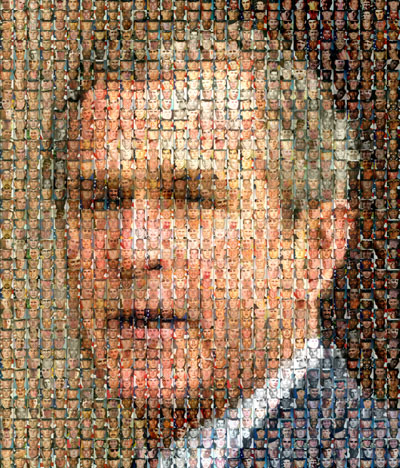
Show Comments »
November 03, 2004
Serena Lu Chang has said she can't figure out why I go by her blog. She's obviously liberal, and I'm obviously conservative and/or Republican. Well, simply put, she makes me laugh. Not at her, but with her.
She talks about her distress in this piece. If I hear about anyone giving her crap, I'll ban you from my site. Even if we have opposite political views and have never actually talked together, I like her. So leave her alone.
Here's the thing. I think she doesn't understand President Bush, and has believed too easily that Bush is simplisticly waging a war against evil. I admit his "Axis of Evil" speech makes it easy to assume that. Heck, I hated that terminology myself because it seemed to me to deny the fact that evil tendencies exist in all of us. Yes, even Barbara Streisand.
So here's what she says:
In my opinion, George Bush's worldview is that the world is divided into two absolute categories: good and evil. For him, there is little to nothing in between. This basic belief motivates his behavior. Invading a country is clearly justified if its leader is evil. Taking away certain civil liberties with the Patriot Act is justified if you believe it will help to catch people who are evil. Banning gay marriage is justified if any marriage between anyone besides a man and a woman is evil. Because evil is bad. Absolutely. And therefore, anything you do to eradicate evil is good: the ends justify the means. A thousand dead American soldiers are unfortunate, but they are justified because their deaths contributed to the removal of an evil man from government.
And that's where I disagree. As I said in her comments, the only simplistic aspect to Bush's Global War on Terror is that large numbers of American citizens dying in horrifying and terrifying ways is worth using military force to attempt to stop.
In my opinion, absolute good and evil do not exist. The world is gray. It is scary and uncertain and full of many complicated layers which swirl around in a stew of ambiguity and make you want to pull the covers over your head.
And that's exactly why President Bush authorized the invasion of Iraq. Because the world is gray, and it's hard to separate the evil of Selma, Alabama from the evil of Tian An Men Square from the evil of feeding people into plastic shredders from the evil of govt-funded abortion on demand from the evil of allowing children to starve from the evil of "rape as punishment" from the evil of playing with the lives and futures of colonies in some European "Great Game". It's even more difficult to assign blame in all those cases...from the person who orders it to the people who don't rise up to depose those responsible to the support systems like the UN that make it possible.
So the one thing we can do is make the world a little safer, reduce the number of places that lack Rule of Law or an understanding of basic freedoms and equality. Remove sources of chaos, one by one. Make the world a little less dark. That's what the GWOT is all about.
Serena assumes that President Bush wants to stop Homosexual Marriage because he deems it evil. That's as silly as if I assumed she supports Homosexual Marriage because she deems it a more pure form of love. The thing is, behaviors have consequences. A govt can try and mitigate consequences, and a govt can attempt to encourage or discourage certain behaviors, but at this time, all evidence indicates that it is good for the stability of a society to promote heterosexual families as a source of repopulation, stability of childhood development, and the teaching of the moralities that maintain societal harmony and peaceful co-existence, but that there is no compelling evidence that SSM would promote the same aspects enough to be worth the destabilizing effect. Maybe someday that evidence will become clear, but at this point, it's not there. The lessons of Pandora's Box should not be so easily dismissed, because the troubles never go back into the box. And one unfortunate aspect of human nature is to push the envelope, and to take "legal" as "license" to the point of ignoring common sense limits.
There are ways to argue against the Global War on Terror and for Homosexual Marriage rights without automatically assuming your opponent is a stupid idiot who can't understand the complexity of the complicated world. Especially when your opponent is someone who has successfully overcome a drug and alcohol addiction, raised a family, lived on the planet for nearly 6 decades, held two of the most important executive positions in the most powerful nation on the planet, and outfoxed both Democrat strategists and the UN. Karl Rove wasn't around for all of that, so you can't say Bush is merely a puppet.
I don't know. Serena, your post touched me more than most people on the left. You seem genuinely perplexed, rather than sputteringly angry that President Bush "stole another election" or whatever passes for talking points among the Moonbats right now. I hope that you can accept this post as a reasonable explanation rather than a rebuke or insult.
Show Comments »
So. Compare that with Spain on 11 March. Compare that to the attack on an Australian Embassy right before their election.
Maybe the Dept of Homeland Security and the Patriot Act weren't such a bad idea after all.
One thing that cannot be denied: the leadership and decisions of President George W. Bush have kept us safe for more than three years. You can also look to Afghanistan to see a safe haven for terrorists being transformed into a stable nation of freedom, and I think we are making progress toward achieving the same thing in Iraq. At least President Bush has four more years to work on it, but I don't think he'll need more than another 15 months.
Like I said last night: you liberal Democrats don't have any idea how good you actually have it right now.
Show Comments »
» The LLama Butchers links with: The dogs that didn't bark
October 22, 2004
I get about 200 hits on my blog every day.
I want every one of you to go read this right now.
I mean it. Freakin'-A, I was getting choked up reading it. This is the real stuff, and I want him to get freakin' 'lanched with every bit of traffic we can. Give him your support. Give him your time. Give him what you can, because he gave everything he could, and gave it for someone who nearly had to give even more.
And they did it for you. And for to help keep and preserve the United States.
Show Comments »
Has anyone else noticed all the headlines and lead stories on cable calling attention to the fact that there's only been one combat-related death in Iraq for seven days?*
Yeah, I haven't, either.
Read More "FYI" »Show Comments »
October 12, 2004
From today's electronic issue of the NRO:
Speed indeed: When Iraqi SWAT commandos hit a target, they hit it hard. Racing forward in white pick-up trucks emblazoned with the unit's emblem — a black scorpion and dagger (an emblem designed by the Iraqis) — the raiders leap from the vehicles and rush toward their objective almost before the enemy has time to panic. The attackers — primarily in their early to mid-twenties — are armed with a variety of personal weapons including AK-47s and SIG Sauer assault rifles, shotguns, pistols, and grenades. They all wear khaki-colored assault suits (similar to zip-up flight suits) with an Iraqi-flag patch stitched on the shoulder. Khaki or black balaclavas cover their heads, concealing their faces. "The Iraqis like wearing balaclavas," says Douglas. "It makes them look fearless, and terrifies the enemy."
And:
The success of the new unit has instilled "great confidence" in both SWAT-team members and regular Iraqi soldiers, says Col. Salaam Abdul al Kathom, the commander of the Iraqi SWAT team. It has also increased pride and a greater sense of security for the Iraqi people.
I'll repeat again: This is exactly what needs to happen for Iraq to become a stable, free nation. The Iraqis themselves must be able to defeat the insurgents and maintain the peace. And like a train pulling away from the station, or an aircraft carrier accelerating from a dead stop, the motion is imperceptible at first as the mass overcomes inertia. In Iraq, they are overcoming the inertia of decades of "keeping their heads down" in the hostile threat environment of Saddam al-Hussein's tyranny. The speed and progress is nearly unmistakeable now, what with stories like this and the Shia insurgents turning in weapons in Sadr City. Things will pick up speed as they move toward the election, as well, I think.
Expect us to be able to withdraw from a stable, independent, free, democratically-run Iraq by January of 2006, less than 18 months from now. It will be a beautiful day.
Show Comments »
October 07, 2004
Iraqi insurgents from Fallujah are in intense negotiations with the country's interim government to hand over control of the city to Iraqi troops, according to representatives of both sides, in hopes of averting a bloody military battle for the city of 300,000 that has become a haven for foreign guerrillas and a symbol of the limits of Baghdad's authority....
The talks apparently gained momentum Wednesday after the mujaheddin shura -- or council of holy warriors -- that now governs Fallujah voted overwhelmingly to accept the broad terms demanded by Iraq's government. By a vote of 10 to 2, the council agreed to eject foreign fighters, turn over all heavy weapons, dismantle checkpoints and allow the Iraqi National Guard to enter the city.
Simultaneously, another troublesome insurgency movement is taking steps towards allowing peace.
Keep in mind, however, that al-Sadr has broken more treaties than the US Govt did with Native Americans in the 1800s, and he has more positions and empty promises than John Kerry. So it doesn't mean much, but if we are hurting him enough to make him squeal and try to gain some breathing room, it tells us we are doing the right things and hitting him where it hurts.
Unfortunately, it may be a while before we see the benefit from these forward strides. Ramadan is just around the corner...
Show Comments »
Part of my maturation into an adult included a recent/belated recognition of the importance of character.
Simply put, as I look back on the most devastating mistakes of my life, most were because I dismissed or did not take the time to fully ascertain a person's character. I made decisions based on optimism, hope, or what the other person chose to display. I saw mixed messages of behavior and chose to take the ones I preferred as the "true" personality.
Now, however, I base all my interactions, choices, decisions, etc, on the character of the individual I'm engaging. Based on what I formerly considered "unrelated" behaviors, and by noticing what choices a person makes on "little" issues, I can predict with great accuracy how they will act or choose or react under stress, when encountering obstacles, on major issues, or when their own self-interest is involved.
Based on all that, the debate and dispute over Saddam al-Hussein's possession WMD is silly, unproductive, and useless.
As I've said before, I can think of three distinct, easily-implemented scenarios by which on the day we invaded, Saddam al-Hussein still had the stockpiles of WMD suggested by Colin Powell's presentation to the UN, yet we would still be unable to find any actual evidence:
1) He possessed large stockpiles, and used GPS to hide it in the trackless desert wastes.
2) He possessed large stockpiles of gas, but released it into the atmosphere in an uninhabited region of the desert.
3) He possessed large stockpiles, but shipped it out to Syria early in the war.
Remember, all of the WMD unaccounted for at the end of Gulf War I that we know he possessed would fit inside the space of a two-car garage. Even if he tripled it, it wouldn't take all that many trucks to transport the entire stockpile anywhere that could be reached by road.
Thus, assertions that Saddam al-Hussein and the state of Iraq didn't possess WMD stockpiles still seem to me to be inconclusive, at best. And dishonest, at worst.
But the bottom line is: Capability plus Intent equals Threat. Saddam al-Hussein clearly had the intent to use WMDs, his character confirms that. The Capability to produce, obtain, and use WMD is ridiculously easy to obtain and maintain and keep hidden. The only way to remove this proven Threat to the United States and to the strategic region of the world was to remove Saddam al-Hussein.
I must conclude that anyone who comes to any other conclusion is simply disregarding the demonstrated character of Saddam al-Hussein. Interestingly, the people who most object to our invasion of Iraq are the people who tend to dismiss character as unimportant, anyway.
Show Comments »
October 05, 2004
The "UN Oil-for-Food" Program.
Show Comments »
McQ summarizes up the significance of recent successes in Samarra, Iraq.
The most important part is right at the beginning:
In a remarkable display of skill, elements of the U.S. Army’s 1st Infantry Division and newly trained Iraqi national forces drove the terrorists from the city of Samarra last week. Killing over 100 of freedom’s enemies and capturing many more, our troops lost a single soldier.The two-day sweep through Samarra incorporated lessons learned on the ground over the past several months especially the need to win swiftly in urban settings. Our soldiers performed flawlessly under difficult conditions. Iraqi commandos, backed by our Special Forces, liberated two key mosques before a hostile media could intervene on terror’s behalf. The city’s population is glad that their oppressors are gone.
This is very significant and highly important, because as I've stated several times before, the difference between Afghanistan's success and Iraq's little-success-in-sight is that we were increasingly able to turn over military actions to the locals in Afghanistan. It started with co-opting the warlords' private armies into a militia, and has continued with the training, organization, and development of a professional national military to displace the militias. It's working in Afghanistan, and we are finally getting the same process under way at speed in Iraq.
Sure, we've had setbacks there, and will have still more. But what does the best military in the world do when it encounters a setback?
The NTC has set up MOUT (Military Operations in Urban Terrain) training as an integral part of all rotations. Concurrent training is taking place at the home bases of units. CALL (combat arms lessons learned) are collected and disseminated throught the military giving up to the minute tips, tactics and techniques from lessons learned in Iraq. The best trained military in the world simply shifts focus, trains and retrains, and then takes on one of the most difficult military operations there is. If Samarra is any indication of success in that focus shift, I’d say they’re well on their way to digging the terrorists out of the "no-go" cities.
Show Comments »
October 04, 2004
Oh, sure, they'll tell you now that they knew it all along, while out of the other side of their mouth they'll be talking down the progress made. But that was a different story before, wasn't it?
Oh, wait, that's not liberals,, it's the fringe players, right?
See, these people want to believe that WWII was the last "just" war. They'll admit it was right to fight Germany because they killed millions of Jews, but they don't care that we have an enemy that wants to kill every non-Muslim in the world. They'll admit it was right to fight Japan because of the sneak attack on Pearl Harbor, but refuse to admit that the attack on the World Trade Center Towers put us at war just as much.
They want to believe that history is safely in the past, that we are just one step from Utopia. I'd like to believe that, too, but I can't afford to live in a dreamworld, protected from naivete and foolishness: I've got kids to raise.
I don't question their patriotism, no, but I do question their common sense.
Show Comments »
Jeff G. gets serious for one post.
Show Comments »
I'm with Jon Henke on this: The CNSNews report that 'confirms' Saddam had WMD and extensive ties to terrorists doesn't seem credible to me.
In fact, I left this comment there:
Well, I'm about as right-wing and conservative as they come, and a blogger to boot...but don't find this report compelling.
To tell the truth, it's more of a gut reaction than anything I can point to; more like it is too much exactly what Iraqi Invasion advocates would need to justify every single aspect of their (our) arguments, and life rarely works out that neatly, if ever.
Who am I to make such a judgment? I'm no one significant at all, so hoot and deride as you will.
To be clear, however, I do think that each and every assertion is true, and that there is some evidence for each point. But such evidence comes from different sources and in different forms, of varying degrees of persuasiveness. The idea that one group of documents could prove every Warblogger talking point is beyond belief for me.
Show Comments »
» The Pink Flamingo Bar Grill links with: CNS article would get more play if the Bush Admini
August 18, 2004
They can and do find vulnerabilities and make plans to exploit them.
Show Comments »
August 12, 2004
Okay, only two days in advance. But while everyone is talking about this today, I blogged about it a full two days ago.
While I'm busy congratulating myself, could someone take the time to look around and see if anyone predicted it earlier?
Thanks.
Show Comments »
» FreedomSight links with: Rep. Ron Paul on Safety and Security
August 10, 2004
In Iraq. I firmly believe it.
Things are coming to a head over there, and I think the result will be a far more stable nation well on its way to its first free election. And all thanks to President George W. Bush, the Republican Administration, and warbloggers everywhere.
And no thanks to Democrats, who are doubly perfidous because they like to say they are the party that cares about human rights while trying to impugn Republicans as only caring about money. Which party is complaining most about the costs of our intervention in Iraq, hmm?
Furthermore, a stable Iraq does make the United States more safe, even if there is no provable, direct connection. Because both an unstable Iraq and a stable Iraq under Saddam Hussein are demonstrably conducive to terrorists attacking the US.
Show Comments »
July 26, 2004
...if President Kerry gets elected. By Q and O Blog.
I'll add one thing to what he said. If John Kerry is already on record that he will make sure he has international support checked off before the US will act, he's just made the price of that international support much higher.
It's like playing poker, but announcing that you are going to fold if the pot goes above a certain dollar amount no matter what you have in your hand...or telling everyone you only go over $5 bids if you have a full house or higher.
Bottom Line: in international politics, you don't tip your hand ahead of time. By doing so, Kerry has already disqualified himself from the Presidency. IMHO.
Show Comments »
Sure, the number of attacks worldwide hadn't increased. That was an embarassing gaffe.
You know, thinking back on that, I have to question the timing of that admission, as it clearly distracted the national attention from questions about President Bush's service in the National Guard 30 years ago, which is clearly the most pressing issue we face today. [/snark]
However, I think this article explains exactly how we are today because of the second Bush presidency. Also note how exact figures and numbers are used throughout the article. The Kerry camp could use a lesson in specificity. No, wait, being specific and accurate about the cost and impact of his promises would ensure he wouldn't get elected...
Show Comments »
July 21, 2004
I hate to be flip about such a serious subject, but, sheesh! Can't these guys do a little research first?
BAGHDAD, Iraq (AP) - A militant group said Wednesday it had taken two Kenyans, three Indians and an Egyptian hostage and would behead them if their countries did not announce their readiness to withdraw their troops from Iraq immediately.None of those countries are part of the 160,000-member U.S.-led coalition force in the country.
From My Way News.
Read More "Terrorists Unclear on the Concept*" »Show Comments »
July 18, 2004
I have two suggestions to help make air travel safer. Someone call Mr. Mineta, okay?
1) Install a small cabinet with many small, locking sections. As people come on the plane, they putt their cellphones in and take the key. During flight, the flight attendants can use a key to engage a locking mechanism so no keys work at all. After the flight, as people shuffle off, they use their key to remove the cellphone. One attendent can watch as people put stuff in to make sure only cellphones go in (to prevent someone from putting in a bomb that can go off on a later flight, if that seems advisable). Then if anyone pulls out a cellphone in flight, they deliberately sidestepped the rules and the other passengers can tackle him, knowing he was planning something. You can do this with cellphones rather than laptops because you can't use cellphones in flight anyway, and laptops are already checked for explosive residue, whereas cellphones are small enough to be missed at the gate.
2) I'd like to highlight what I said in the post I'm not proud of (2nd one down): Any pilot who wants to make sure people stay in the seat can do so by seeking out turbulence or even by altering the flight profile (dives, climbs, banks, etc). Sure, it wastes gas, but isn't that better than wasting lives? If passengers are acting suspicious, the flight attendents should tell the pilot so he can get them down to the level where explosive decompression isn't a danger, at the very least.
Show Comments »
July 16, 2004
By now you've heard the story about the scarily-weird Syrians.
In case you haven't, you can read a definitive round-up here by Michelle Malkin:
Bill of the INDC Journal had a similar eerie experience.
Some commentary by the Ace of Spades.
And what the heck:
Did James Woods see a dress rehearsal?
Finished with all that? Good. Here's the thing: As a nation, there has been a general feeling against racial profiling. If you assume that racial profiling arises from the idea that the only way a black man could have enough money to buy a BMW is if he deals drugs, then, yes: racial profiling is racism.
But if you feel that racial profiling is nothing more than looking at what population is most likely to commit a specific crime, and then look for the most common characteristics of that population, then maybe it isn't racism as much as a good idea. After all, there's no point in wasting time doing audits on a small-town Tastee Freeze in New Mexico if you want to capture Wall Street embezzlers, right? You consider who is mostly likely to commit a crime, and you look at him first....but by no means only.
But our legal system is predicated on the idea that someone is innocent in the eyes of the law until proven guilty. Or is it? If so, how did this happen, and how could it ever have happened? See, if the guy had been holding a gun, it would have been okay, because the officer has the right to defend himself...sort of. BIG gray area, depending on the situaiton, circumstances, politically-active groups in charge.
The point is, it's easy to pass laws against racial profiling if the result of being less successful in arresting drug dealers merely means $1.2 billion dollars of drugs reach the streets instead of just the $1.1 billion dollars if we'd used racial profiling to catch that extra guy.
To put it another way, racial profiling is a tool that can be effective in some circumstances. The higher the cost of being wrong, the more likely you will use any tool at hand, even one that might well be racist.
Is it any surprise that we have rules and procedures designed to prevent racial profiling in our transportation system? We do, after all, have a Democrat heading up the Department of Transportation in Mineta. Ann Coulter and Michelle Malkin, among many others, have decried the searching of 80-year-old black women and 12-year-old asian boys and many others when the clearest threat is from Middle Eastern terrorists, and that makes sense.
Except that it's not always easy to tell who is from the Middle East, because there are Middle Easterners with white skin, sandy hair, red hair...there are "whites" who are dark-skinned and look Arabic. Some Scandinavians have black hair, and when combined with a good tan. Heck, before my full-German (Wendish) dad's hair turned silver, he could have passed for a Middle-Eastern man.
And take all these examples linked above. What, exactly, would you do to the suspicious people that wouldn't be in violation of the 4th, 5th, or 14th Amendment to the US Constitution?
The only reason this question is being asked at all is because the cost is higher than ever before. The terrorists have shown their ingenuity in developing plans to kill large groups of people. Let there be no doubt: if they could acquire a nuclear device, they would not hesitate to detonate it in the most dense population center they could.
We have Constitutional rights. We have the Right to Life, Liberty, and the Pursuit of Happiness. How many of the 3000 people killed on 9/11 are able to pursue those rights...? Oh, yeah: none.
But you can't throw out the US Constitution just to save a life or two, right? Well, no... If we tear up the Constitutional guarantees of rights for a little safety, we deserve neither the rights nor the safety, right? (to paraphrase Ben Franklin). Well, it just ain't that simple. It isn't that simple at all anymore.
A new society dawned in the United States on 9/11. I think no one realized the extent it would affect the future. Many people assume things have gone back to normal, mostly...but they haven't. If we relax in the wrong place at the wrong time, we will have several more thousand dead, if not tens of thousands, or hundreds of thousands. The cost of guaranteeing freedom from hassle and interference went through the roof in September of 2001, make no mistake. Maybe we dodged a bullet on the flight described by Annie Jacobson, maybe not. Even if not, we have certainly dodged other bullets. In the weeks and months after 9/11, several individuals were able to sneak all sorts of weapons and banned items on board. Apparently the searchers have found most of the smart alec insulting notes, though.
(Q: What did you find, Sergeant? A: We found this spoon, sir!)
Somethings gotta change. Some things will change.
First, I think we must start to accept restrictions on certain behaviors. It is already illegal to merely joke about having a bomb. So we threw free speech into the gutter, huh? Well, we seem to be doing fine in all other areas of free speech.
So, can we say "suspicious" behavior needs to be considered sufficient grounds for an Air Marshal to detain a suspect? That sounds good, except that all it takes then is one person hired or designated to be excessively suspicious, and then the Air Marshal has his hands full and cannot do anything to stop the rest of the bad guys from assembling their weapons in the bathroom.
Therefore, second, I think we need to designate more legal power aircrew to order people to sit down.
In any case, since it is a matter of life and death for not only the people on the aircraft but also the people at a possible impact point, people will have to expect "rude" and abrupt treatment by air travel professionals. We used to teach our children to do whatever a police officer says, immediately and respectfully. We need to teach our children to do the same with airline attendents.
Third, I think our society will grow to adjust to the situation. Veteran air travelers have already adjusted to the extra security checks, I think that as a society, we can and should begin to expect that we must defend ourselves on flights. Todd Beemer and the rest of the "Let's Roll" crew showed us that it is possible to affect the outcome and save lives. If we expect the aircrew to do something about it, the aircrew won't be able to do their jobs of attempting to ensure our comfort and safety.
But that bumps us right up against another problem: individual autonomy and Principle of The Rudest Person Wins. Rude people get away with so much because no one else wants to confront them...the fact that the person cares so little about societal norms that they are already being rude leaves the polite individual slightly afraid that even speaking up against rude behavior might earn a verbal barrage, or even a poke in the eye. Again, the cost of getting involved had usually been considered too high, and most people will suffer rudeness in silence rather than risk making a scene or escalating the situation into confrontation. But it's worse than a poke in the eye now. Now if you don't say anything, it might end up with your death as the plane plows into a skyscraper. And so, we have to develop the courage to confront those individuals. Ask them what they are doing. Ask them to explain themselves. Ask them to stop moving around and to stay in their seat. Expect them to be rude and abusive to try to intimidate you into silence, and that's when the fellow passengers have to stand up and defend the person challenging the suspicious behavior.
I think society will change. We don't know how to handle this. ...yet. But we will. Americans are flexible, and within another few years, flying etiquette will probably end up developing to the point where we can police ourselves to a great extent.*
One last thought: why didn't the pilot do anything?**
Read More "A New Etiquette" »Show Comments »
July 12, 2004
June 28, 2004
This needs an Instalanche, if you ask me.
Show Comments »
Taliban kill 10 (some reports say 14) Afghanis because they were registered to vote.
Yes, they will kill to prevent people from having a say in their government.
Show Comments »
June 27, 2004
Al Qaida has found a new game: beheading hostages.
Why?
To date, they have captured:
- Daniel Pearl, reporter, beheaded on video
- Nick Berg, civilian, beheaded on video
- Paul Johnson, contractor, beheaded, pictures released
- Kim Sun-il, a Korean civilian aid worker, beheaded on video
- three Turkish contractors, to be beheaded within 3 days
- Cpl. Wassef Ali Hassoun, a US Marine of Lebanese descent
- Amjid Yousef, a Pakistani driver for the US military
Gen. Grange, a CNN military analyst, says that it is a poor strategy. I don't think he understands.
Read More "Hostage Crisis" »Show Comments »
June 26, 2004
I think it is worth it to stop by the old Lunaville.org site every once in a while. Please note: it has a new URL.
March was a bad month for the United States. However, it is interesting that even with the recent upsurge in violence, US fatalities and woundings are dropping off, and will probably be at the 2nd lowest level since last September, with only February being lower.
Missed opportunities. What was going on in February that allowed the violence to be so low? What caused it to rise up again? Was there anything we could have done to prevent the surge in violence?
We captured Saddam in December. I was predicting that with his capture, we'd have things calmed down by February or March at the earliest, but certainly things we would have withdrawn the bulk of our troops from Iraq by the Transfer of Authority on 30 June.
Looking back, it appears that two significant trends developed between December and March, along with one major failure.
Read More "US Casualties In Iraq" »Show Comments »
June 24, 2004
It's going to get bloody, folks.
At this point, I cannot even tell you what the final result might be. In every direct engagement with US forces, the enemy loses. But in an insurgency like this, they don't have to engage us directly.
Will the current campaign result in significant attrition of insurgent forces? Will the Iraqis shrug off the lessons of a decade of oppression and begin standing up for their own nation and security?
It is important to note who the insurgents are targeting: the Iraqis, both common citizens and the government.
We don't have to kill every insurgent to win. We just have to stand firm, and the Iraqis merely have to take responsibility for their nation. Right now, I can't insist that will happen. I know we'll do our part...
Show Comments »
June 23, 2004
What do we need to do to win in Iraq?
Actually, that's a trick question; the main problem in Iraq is the insurgency, and any military action we take causes as many new problems as it resolves. Furthermore, victory cannot be measured in our achievements, but in what the Iraqis do. We can't stop the violence in our own capital city of Washington DC, how can we stop the violence in Iraq? Thus, our "victory" can only be defined as being able to withdraw all foreign military forces from Iraq with the confidence that it is free, democratic, stable, and possesses enough strength to remain so.
Afghanistan, by comparison, is going quite well. The final victory hasn't been achieved there, either, as many of the warlords still retain their personal militias and are still jockeying for power underneath Karzai, and would displace or replace him with a puppet if they could. But all in all, Afghanistan is much farther down the road to stability and autonomy than is Iraq, and seemingly the gap is larger than the 18 month difference in the initiation of operations in each theater.
Why does Iraq seem to lag behind? Why has Afghanistan been so successful? What needs to happen for Iraq to catch up?
Initially, it seemed there were more similarities than differences. Both nations were suffering under brutal oppressive regimes with strong ties to international terrorist organizations. Both nations had ethnically-diverse populations that should have strong incentives to cooperate in both the battle and the establishment of a democratic government afterwards. We had already selected politically-adept ex-patriots to head the transitional government in each nation until true elections could be carried out.
Unfortunately, it is the differences that have made the biggest difference. The Afghanistan militias were experienced fighters, never fully conquered by the Taliban, and both sides were veterans or trained by veterans of the resistance that drove the USSR out after a decade of warfare. After superior US military technology, training, discipline, and firepower reduced the number and capabilities of the Taliban military, the Afghani warlord militias were able to first defeat the Taliban, then reorganize into a force capable of harrying the Taliban remnants and dealing with pockets of holdouts whenever engaged. In contrast, most Iraqis have experienced decades of oppression in which any person who stands out or rises up was brutally put down, and their relatives punished and tortured. We have spent one year training the Iraqis, but in the most recent crisis against Muqtada al-Sadr's militia, most of the police quit at the first sign of trouble. General Eaton, the officer responsible for training the Iraqi forces responsible for security (both police and military), seems to understand the mistakes he made and is taking steps to correct the problem. Specifically, we need to ensure the Iraqis realize they are fighting for their own country, not for us. It is no longer our fight, and they can no longer stand by and remain uninvolved. I'm sure that many of the police lacked confidence in the professionalism of themselves and their compatriots; thus, when faced with an armed uprising, worries over what would happen to their families if they died were more important than fulfilling their professional obligation. We have reorganized both training and the chain of command for the Iraqi forces. Stability of the government should help reassure them that if they fall in defense of the fledgeling nation, their family will be cared for.
It seems we also were extremely lucky in choosing Hamid Karzai for Afghanistan, and not so lucky with Ahmed Chalabi. Karzai has proven to be an able politicician, playing warlords off against each other and increasing their commitment to the new government with coveted positions in the government. He has made some mistakes, but has always recovered; at times, the warlords have considered trying to replace him with a more tractable puppet, or displacing him with themselves, but Karzai always manages to sidestep such challenges with timely appointments and shifting alliances. Through it all, the people have been impressed by the professionalism of the new Afghan National Army in comparison to the Afghan Militia Forces (regional units comprised largely of the warlords personal armies) and are growing more committed to a strong central government to reduce the day-to-day control the warlords currently possess over the citizens in their region.
Chalabi, on the other hand, had no natural constituency in Iraq and was not well-liked. The Grand Ayatollah Sistani had more direct power over the people, and Chalabi deferred to him. Unfortunately, Sistani had no desire to oversee the transition or maintain stability, other than trying to ensure that his Shia populace obtained the bulk of political power through proportional representation. It's not that Sistani has been an obstacle, merely that he feels his role is limited to that of a religious leader ensuring the fortunes of his followers within a democratic Iraq rather than actively trying to bring about stability in the first place. It is important to note that the Muslim faith is established on the idea of a religious "marketplace of ideas", in which religious leaders gain power only through their ability to sway people to agree and follow their personal vision. There is no way for an Islamic religious leader to "ex-communicate" any Muslim who makes even a pretense of following the Five Pillars of Islam. This is why the Grand Ayatollah feels he cannot order other religious leaders to do anything, whether to stop preaching sermons against the coalition or to encourage them to support the US or transitional government. This is why he didn't do much to stop Muqtada al-Sadr's uprising, other than attempting to counsel him personally. The most any religious leader can really do is issue a religious edict and hope his wisdom and argument are persuasive. In my opinion, the people of Iraq question the legitimacy of an appointed leader like transitional government Prime Minister Allawi enough that this problem won't be resolved until we have a free, fair, and transparent election that results in a government with a clear mandate.
In conclusion, we will win in Iraq when we successfully establish a professional military and police force that is committed to the nation's well-being and survival, and when we have a government that enjoys a firm mandate of the people. Until that time, Iraqi citizens who see their security forces too afraid to fight will be too afraid themselves to help rid themselves of the insurgents and foreign fighters who use the questions of legitimacy as a pretext to continue killing Iraqis.
Show Comments »
June 20, 2004
This:
Let there be no mistake, those of you who don't believe in this war: the Ba'ath regime were the Nazis of the second half of the 20th century. I saw what the murderous, brutal regime of Saddam Hussein wrought on that country through his party and their Fedayeen henchmen. They raped, murdered, tortured, extorted and terrorized those in that country for 35 years. There are mass graves throughout Iraq only now being discovered. 1st Battalion, 5th Marines, out of Camp Pendleton, liberated a prison in Iraq populated entirely by children. The Ba'athists brutalized the weakest among them, and killed the strongest.
And this:
I stood on the bloody sand where Marine Second Lieutenant Therrel Childers was the first American killed on the ground. I pointed a loaded weapon at another man for the first time in my life. I did what I had spent 14 years training to do, and my Marines - your Marines - performed so well it still brings tears to my eyes to think about it. I was proud of what we did then, and I am proud of it now.
And if you think the second paragraph (actually comes first in the article) is, in any way, counter to the first, you don't understand the overwhelming majority of us serving in the military. And you don't speak for us.
Via Splash.
Show Comments »
But she's getting it anyway.
See, although this runs counter to conventional wisdom, I had never seen anything at A Small Victory that justified her place in the pantheon of Blogdom or the number of hits/traffic/links she gets.
But maybe I haven't stopped by at the right times. Because today I saw this. She calls it a rant, but if so, it's the most calm and cool rant I've seen. She states everything I have been feeling with absolute clarity, but without foul language, without insulting terms, without actually attacking anyone...but still managing to highlight exactly why the anti-war argument is short-sighted, self-destructive, and helpful the people who want to kill us.
So even though she doesn't need my link, and anyone who visits here probably already stops by her site more regularly than me, I'll link the rant. And I'll stop by her place more often.
Show Comments »
June 17, 2004
Iraqi Civil Defense Corps saves Marine
Show Comments »
...there is simply no decisive point on the ground at which we can declare that victory over terrorism has been attained. And there's not going to be. It's not like WWII where there's an end zone called the Reichstag.This is not even a point of contention among military officers, and never has been. Everybody knew going in that this war would not be decided on the battlefield.
You can find the rest of it here
If you aren't reading Iraq Now often, you should be.
Show Comments »
June 16, 2004
So, can we question Susan Lindauer's patriotism? Or does the fact that John Kerry served in Viet Nam make that off-limits, too?
In the same vein, are Democrats seriously implying that once someone has been injured while serving their country, their patriotism can never be questioned? So if I, say, get injured on this deployment, I can freely sell secrets to Russia for the rest of my life and no one can touch me? No? Well, then, I think Senate voting records are fair game.
Show Comments »
An excellent article, truly worthy of your time.
Way to go, B. Preston!
[sigh] I'll just add Ms. Malkin to the list of people who will never send traffic my way...
Show Comments »
June 13, 2004
Check out some of what he said at the G8 press conference:
...there was some concern when the initiative was first proposed that this was America trying to make the world look like America. It's not going to happen. I fully understand that a free society in the Middle East is going to reflect the culture and traditions of the people in that country, not America.
I also understand it takes a while to adopt the habits of a democratic society and a free society. After all, it took our own country a while. You might remember the period of the Articles of Confederation. You do remember the period of the Articles -- (laughter.) It just took us a while. It's not easy work. It's hard work. But we believe it is necessary work, because free societies are peaceful societies. The best way to defeat terror is to speak to the aspirations and hopes of women and men.
Yes. Exactly. The President gets it.
The whole thing is here, and I found it via Kronology.
There's probably some other excellent stuff, but I haven't had time to read the whole thing.
Show Comments »
June 11, 2004
Although I wasn't the only one to say so, I was certainly one of the people insisting that the pre-war intelligence regarding Saddam's WMD was correct, and that I could think of at least three scenarios in which the intelligence was correct but that we still would not find a stockpile of WMD in Iraq.
The UN says one of those scenarios is true:
Saddam shipped it out. Before, during and after. Catch the significance?
And since it was the UN saying this, I now suspect that all the Democrats who have been saying that only the UN has any legitimacy will now say the UN is a worthless group of tyrant-coddling fools. It won't be logically consistent, but such a stance would allow them to continue to ignore that the war on Iraq is probably the most fully justified war since the Revolutionary War. Yes, more justified than even WWII.
Show Comments »
But I'm gonna do my part to try:
Do you support the failed, wrong dead-enders? Or do you support a President with the moral courage to make the right decisions to make our nation and the world a better and safer place?
Show Comments »
June 10, 2004
And this article describes them honestly and accurately.
I'm impressed with how General Eaton admits his fault, and I approve of their willingness to change direction when they learn something isn't working.
There's hope that Iraq will be resolved far more quickly than Bosnia/Kosovo were.
Show Comments »
France and Arabic nations don't like President Bush's plan to improve things in the Middle East.
Honestly, I think that's it in a nutshell. They like things the way they are. And it is very interesting that France thinks it stands to lose if democracy, freedom, and stability come the Middle East.
Show Comments »
June 08, 2004
...although if we have, we won't know it for a while.
A decent article from the BBC.
Excerpt:
However, the official also acknowledged that US forces had changed their tactics in the light of Iraqi concerns about the level of violence, switching from offensive operations to what he called a "slow squeeze" strategy.He suggested this may be a model for the future.
As part of the transition, US commanders are said now to be thinking of adopting a more low-key approach in guarding infrastructure and protecting the new Iraqi leadership.
And from my limited viewpoint, it seems to be working.
Show Comments »
Don't Forget:
It's been more than 13 years since Captain Scott Speicher was shot down while on a combat mission over Iraq during the first night of Desert Storm, becoming the first American casualty of the war. Initially classified by the Department of Defense as KIA/BNR (killed in action, body not recovered), Captain Speicher made history again in January 2001, when he became the first American service member ever to be switched from a status of KIA to MIA (missing in action).On October 11, 2002, Scott's status was changed to POW, an acknowledgement by the Department of Defense that he is alive and a prisoner in Iraq
Pentagon officials did not make the decision to change his status based on a whim—a significant amount of evidence suggests that not only did Captain Speicher most likely eject from his F/A-18 strike fighter, but he also survived the landing. Even more compelling is subsequent evidence that indicates he may be a prisoner of Saddam Hussein in Iraq.
From Free Scott Speicher
Obviously, he's not being held by Saddam Hussein anymore. It is conceivable he is being held by one of Saddam's subordinates who is still at large. More likely, he was either transferred out of the country, was murdered, or died in custody. We need to know what happened.
We cannot abandon our own.
Show Comments »
June 04, 2004
1. If terrorists attack and I am among the fallen, I demand that the United States continue to fight the war on terror anywhere and everywhere on the globe until my children can freely and safely visit the spot where I fell.
2. If I fall in the Global War on Terror, I hereby give full permission for my image, my story, my career to be used to support the Bush Administration and the choices they have made to this point in the Global War on Terror. I absolutely support what we are doing. The few things I might have done differently have all turned out better than I would have expected. The things that have turned out badly are all things I would have done, as well, because the available information at the time supported the decision President Bush made. I support President Bush in life, I want it known clearly I would support him just as strongly in even my own death.
Show Comments »
June 03, 2004
...at least, that's my take.
Show Comments »
May 31, 2004
The military loves to "process" people. No matter where you go, you must go through "inprocessing" when you arrive, and "outprocessing" when you go. You go through the same sort of things for quarterly and annual training, medical check-ups, vaccinations.
I went through inprocessing when I arrived on station here. One apparently mandatory aspect of inprocessing is The Video of People Doing Cool Stuff to Get You Excited About Your Assignment. We had the obligatory testosterone shots of jets flashing past and bombs being dropped and impacting on tanks and fighting positions with impressive and lethal flashes of light and billows of smoke...
...but what moved me the most, what got me choked up, was simply the shots of people doing their jobs. Watching guys use pickaxes and shovels to dig trenches for cables and/or pipes. Seeing men and women synchronously lift tent poles to set the roof of the new chow hall tent. An airman in a grease-grimed uniform ducking under an engine to tighten a bolt on the underside of the wing. An NCO gently sliding the fuse into Mk 82 bomb.
The shots weren't staged; all the airmen seemed oblivious of the filming. I can only assume it was because they had a job to do that absorbed too much of their attention to waste time or energy being self-conscious.
We do our job. We do our job under conditions that would make most Americans quit in disgust. We do our jobs on holidays when we'd rather be home with our families. One co-worker called me "Holiday Man", because in a span of about 6 months the list of important dates I miss includes just about everything except Columbus Day: Anniversary, Veteran's Day, Thanksgiving, Christmas, New Year's Eve, my birthday, my wife's birthday, Memorial Day, Father's Day, and Independence Day. We do our job even under fire, even if it means our lives are given. Our blood, sweat, and tears are spilled in the dust of the Middle East for you, for our families, and for our comrades.
At some point, it's no longer a job. At some point, it is a duty that we have undertaken, a burden that we shoulder. Why? Why us? Because we can. Because others will not. Because sometimes, someone just has to "take one for the team", and fairness and equality don't always enter into it.
That doesn't mean we are special, or different, or even heroes. Some of us join out of chance. Some of us join because it seems like the best choice at the time. Some of us join for purely selfish reasons, and only later grow into the responsibility. I know that for every one of us here, there are 10 people back home who would be willing, even eager, to take our place. But it is not to be. Your job is vital, too.
You must keep the nation for us. Give us something to come home to. Keep the economy humming so that we can afford to give the military pay raises and quality-of-life improvements and new, up-to-date equipment and top-notch training. Love your wives/husbands, teach your children. Vote for the candidate of your choice after you educate yourself. Keep the faith.
It's your duty.
Show Comments »
May 30, 2004
General Franco is still dead, and Muqtada al-Sadr is still an untrustworthy fool.
Please note the paragraph stating:
The US-led coalition has said it was not a party to the agreement, but would suspend offensive operations to give the deal a chance to bring peace to Najf.
The US had no reason to go along with the agreement. We have al-Sadr on the run and we could have pressed our advantage. But we haven't really pressed any advantage we've gained yet. Why?
Because we are teaching them. We are not imposing order as much as encouraging maturity: fight and die, or assimilate and live.
I'm sure we are still pursuing leads in military intelligence to locate ringleaders and weapons locations. But it seems that we are content to wait for them to attack us before we take them out.
It makes some sense, on some levels. I'm not sure I would have the confidence to advocate this method. But I can see that if I had a foster child who had been severely physically abused, I might choose a more patient, non-reactive, certainly non-violent response to that child acting out. Yes, I realize this is more serious than that, that our soldiers are dying in following this plan. But don't police officers do the same thing? Don't Peacekeepers do the same thing? Haven't we, at some unspecified point, changed our mission from major combat to peacekeeping? It sure seems like it from this vantage, and no, they don't keep me in the loop; I'm guessing as much as anyone else is.
If I'm correct, then we are showing restraint and patience to demonstrate that attacking only brings death, but those who don't attack won't be pursued....for now. It implies that amnesty might be possible for those who lay down their arms and begin helping rebuild the nation. It shows that we are not an occupying force trying to insidiously make Iraq dependent on us enough to steal oil. It lends credence to the oft-repeated intent to leave as soon as Iraq is peaceful and stable. It gives them the chance to learn there are other ways to seek goals other than fighting and killing.
We'll see. We've shown remarkable restraing over the last month, and all over Southeast Iraq, Muqtada al-Sadr is being blamed for the violence and the damaged mosques, not the US. This is the only explanation I can think of...and it does seem to be working....
Show Comments »
A tragedy, yes.
Full text in the extended entry.
I'm really not sure what else to say about it. From the report, it is my understanding that his actions were still heroic, and still saved lives in his platoon. It wasn't a case of a bomb going off course or badly-aimed fire coming from behind, it was an engagement in which both sides thought the other was the enemy in a condition of bad lighting and visibility restriction.
...I just didn't want to ignore the story, even if I have nothing significant to say about it...
Read More "Friendly Fire Likely Killed Tillman" »Show Comments »
May 28, 2004
Or post the pictures, if you aren't going to do anything about it?
Hmmm...could the agents have been busy investigating a different sinister gathering?
Show Comments »
May 26, 2004
I really can't go into specifics, much. I hate jail time, yanno? So I'll just give you an overall impression instead, okay?
I'm surprised, disconcerted, upset, and disappointed in how the conflict has progressed since I left right at the beginning of the year. I left this place in pretty good shape, and when I come back, just look at the mess everyone made of it in my absence!
No, seriously, I really thought that capturing Saddam would be a turning point, and I even predicted that things would be largely calm by March at the latest. Obviously, I was absolutely wrong.
But I do try to point out: in matters of serious import, when you have an opponent actively trying to stymie your efforts, the best-laid plans do often go awry. Sometimes ours has.
And yet, it also hasn't.
Where is the nation-wide uprising of Iraqis who reject our presence? We've avoided that pretty well. Where's the reign of death and destruction in the United States to repay the indignation of having a leading Muslim leader deposed and/or humiliated? Absent, but not from their lack of trying. Where is the huge Shia-Sunni civil war? It's been more than a year, and there hasn't been one yet...not even close, actually. There's actually more of split among the Shias right now, with Muqtada al-Sadr leading a group of uneducated, pessimistic thugs only on the basis of a message of hate and anger...
See, I was frustrated we didn't squash Muqtada like a grape when he started causing problems. He took advantage of the negative press regarding Fallujah to create a ruckus that would increase opportunities for negative, anti-US press. We tried all sorts of methods to get him to back down, but he has stubbornly hung on. As recently as a week ago, it looked like he was expanding the fight against us, attracting followers, and gaining ground.
And then over the course of one weekend, our slow, patient, indirect methods started bearing fruit. Muqtada al-Sadr's star is waning, and waning fast....and we did it without having to destroy a mosque, bomb a village, and much of the population of Iraq blames Muqtada al-Sadr for the hardships/disruptions to their lives engendered by the conflict with al-Sadr.
Heck, Sistani (the leading Shia leader, one who insists on a proportional representative government to ensure Shias can dominate the political scene) even approved the nomination of a moderate Sunni to be the Interim President appointed to take over on 30 June until the first elections.
My point is that a more direct engagement with the insurgents might be cathartic and satisfying, but would result in little progress in the region. We need to:
1) Ensure a smooth transition to an Iraqi government that the Iraqis recognize and credible and legitimate
2) Train Iraqi police and military forces to provide security for themselves, with us only in an advisory role
3) Prevent any destabilization movement from gaining significant traction
We've made progress in each of those areas. While things are not as good as I had hoped they would be at this point, things are also far better than news media and left-leaning pundits have predicted before the war, immediately after the war, and even several times since then.
President Bush might not have the situation to the point you expect. Before you blame him for it, remember that things are far more stable and positive than our opponents hoped and work for.
It's a tug-of-war, and while we haven't dragged them into the mud yet, the ribbon on the rope is slowly moving in our direction.
Read More "The War In Iraq: Progress Report" »Show Comments »
» blogoSFERICS links with: 'No Battle Plan Survives First Contact With the Enemy'
» resurrectionsong links with: What I'm Reading While I'm Not Writin'
May 25, 2004
This one via Rae.
Excerpt One:
You would be very proud of the Marines as they have been able to switch gears from intense offensive operations back to what we call "stability operations." Stability operations simply translates to getting out into the countryside and teaching Iraqi Police and soldiers how to do their jobs. More importantly, our priority is just making contact with them and trying to instill a sense of confidence and pride in what they are doing. As I have shared with you over the past 15 months or so, it is hard to imagine trying to establish a police force or "national guard" (the equivalent of what we are working with) out of a population that has never even seen such entities as we understand them. If you said National Guard in Missouri, most people would think "the guys who show up when there is a flood, blizzard or tornado to help people." Or maybe after 9/11, that guy at the drug store who left for Iraq for a year as part of an engineer unit.Here, they simply have no paradigm of what such a force is.
Excerpt Two:
The enemy is confused right now. He goes to bed convinced he is going to win because he watches the Al Jazeera and then the US media and believes that we are a weak willed people who can be terrorized and who have a penchant for self-loathing. Then, he wakes up and he comes across a coalition check point and he sees a young Soldier or Marine who stands there like a rock and exudes strength and conviction. The same terrorist who was in the mosque the night before in a frenzy is now subjugated by the presence of a guy who does not match up with what he has been told and sees on TV. It must be confusing as all get out. Every day, he will continue to see in three dimensions the best that our society has to offer and their is no amount of sound bites that will trump that in the end.
Show Comments »
This one via Tony Woodlief.
The Whole thing for you to read
The Excerpt:
So, the Iraqis here say that now that the Sunni's are in Abu Ghraib, they tell me it's "God's judgment." And how do the Kurds feel about it? Yawns all around. It is only the liberal American media who will just not let this thing go. I still tell folks, however, that this scandal doesn't represent what is great about America. But they follow up by saying, "What about justice for those who did this to us under Saddam? There is no justice for them!"
Show Comments »
All from the National Review Online.
Show Comments »
May 19, 2004
Dear Hans Blix,
You didn't find the sarin gas shell. In fact, you didn't find anything. You do realize you have zero credibility on this issue, right? Return to obscurity, pawn.
Dear Members of the Political Left,
You said the war wasn't justified because there was no evidence of a WMD program in Iraq. We found mobile labs and precursors that possibly had civilian uses...but weren't being used for those civilian purposes, and could be used to produce WMD at the press of a button.
But that wasn't good enough for you. You insisted the war wasn't justified because we hadn't found any actual WMD delivery vehicles. We found several empty warheads...no reason for Saddam to keep them unless he might want to use them right?
But that wasn't good enough for you. You insisted the war wasn't justified because we hadn't found any actual WMD. We have now found both mustard gas and sarin gas still in the shells.
But that wasn't good enough for you, either. You now insist the war wasn't justified because the shells were degraded with age and we haven't found a stockpile. Will anything ever be good enough for you?
Your superhero, Hans Blix, couldn't find anything. The military did. Clearly, the inspections were not working.
You claim "Bush Lied" or at least "misled". It's time to admit that you are the ones being dishonest on this issue.
Dear Members of the Mainstream News Media,
The evidence given by SecState Powell in his address to the UN was based largely on visual evidence of Iraq moving WMD; the indicators were in the presence of decontamination trucks and the like, because if Saddam hadn't been moving the WMD in an attempt to conceal the WMD from the inspectors, we would not have had the satellite photos.
Still, Hans Blix could not find WMD. But the terrorists stumbled across some, which resulted in an inadvertant discovery by our soldiers. WMD has been found in Iraq in the hands of terrorists. How did it get there? Obviously, it was either concealed by Saddam to be found only by chance (again, inspections not working), or were delivered directly to the terrorists/former regime loyalists for safekeeping. Either way, President Bush is at least partially vindicated. Why aren't we hearing this from any of you? Why aren't you providing some sort of analysis of this issue? Why don't you do your job? Are you too busy trying to ensure President Bush is not re-elected? "Objectivity" is just a nonsense-sound to you, isn't it?
Dear SecState Powell,
I'd heard that you tended to cover your posterior, politically-speaking. I guess it makes sense, since most Generals must be politically savvy and self-protective to make that level of rank. It's no wonder you are the Left's favorite Republican.
Thus, it is sweet irony to me that the very same week you try to protect your reputation and distance yourself from President Bush by telling Tim Russert your briefing to the UN on WMD was apparently mistaken, we encounter actual WMD in Iraq. Yes, it's not a stockpile indicative of an active WMD program. It's also still significant enough that your retraction makes you look pretty stupid. I'm very glad you won't be around as Secretary of State any more. If you worried more about integrity than reputation, your department might have had some more successes.
Show Comments »
May 17, 2004
At the very least, this represents a major development in the evolution of tactics used against Coalition Forces.
Read More "WMD Found In Iraq" »
Update:
This report goes a little deeper; however, I disagree with some of its conclusions. Even if this shell dates back to prior to the first gulf war, I think its presence is more than an oversight (oops! forgot to destroy one!), and signifies a deliberate effort to retain WMD, which is a further material breach of Resolution 1441 and absolutely satisfies all given objections to invading Iraq.Update II:
Hm. A definitive coverage on the Sarin gas shell can be found at Citizen Smash's
Show Comments »
Phil Carter of Intel Dump has some good stuff regarding the Prison Abuses in Iraq in his post on 15 May.
If the sources are correct, and if his analysis is accurate, then I'm wrong about Gen. Karpinski, and Rumsfeld should step down. However, this is still in the early stages, and I'm not willing to concede anything; my assertions may still bear out. We'll see.
But like the Nick Berg story, this raises more questions than it answers.
Update:
This seems to answer the allegations well, in my opinion.
Show Comments »
May 16, 2004
There will need to be an accounting for both nations, at some point. Now isn't the proper time, because we are fully occupied in Afghanistan and Iraq. 2005 or -6 might be a real possibility for either one, though.
Show Comments »
May 15, 2004
Evidence is “something that indicates,� according to Webster’s. Proof is “conclusive demonstration.� The report of a well-regarded allied intelligence service that a 9/11 hijacker appeared to have met with an Iraqi intelligence agent a few months before the attacks is certainly evidence of an Iraqi connection....snip...
Iraq was indeed involved in those assaults. There is considerable information to that effect, described in this piece and elsewhere. They include Iraqi documents discovered by U.S. forces in Baghdad that U.S. officials have not made public.
Thanks to Dodd Harris
Show Comments »
Under a barrage of international and domestic criticism, the top U.S. commander in Iraq has banned virtually all coercive interrogation practices, such as forcing prisoners to crouch for long periods or depriving them of sleep, the Pentagon announced on Friday.
Personally, I fear that it will turn out to be a mistake, but I can understand why they made this decision...
Show Comments »
COALITION forces will leave Iraq if the new interim government asks them.The United States, UK, Italy, and Japan made their position clear following a meeting of the Group of Eight foreign ministers in Washington.
You may, if you wish, peruse the entire piece.
Show Comments »
May 14, 2004
Spartacus has the goods.
You know the drill.
Show Comments »
I guess I wouldn't to go so far as saying Nick Berg is dirty...
...but the more we learn, the more perplexing his story seems.
The Commissar has a good summation, including links to articles at Wizbangblog and Chronwatch.
My own early gut-reaction is that Nick was a useful idiot to the terrorists, and they used him as an unwitting sacrificial lamb. I think he agreed to help, and didn't realize the caliber of the men he was dealing with.
...but I could be wrong. There may be a rational explanation for his 2-degrees of separation with Moussaoui, but I can't think of one off-hand. His continued presence in Iraq is rather questionable, as well.
I don't know. We may never know the truth.
Show Comments »
Thanks, Rae, for sharing this with us.
Excerpt:
Show Comments »
May 13, 2004
When the pictures of the abuse of prisoners by the military in Iraq first surfaced, I advanced the idea that a large contributing factor was "Mob Mentality". By this, I mean that the idea of abuse was something that grew almost on its own, and may be impossible to assign to one person. It was the result of "egging on" and "spirit of the moment" that can happen to anyone under the right circumstances. It is the sort of thing that leads to riots, excessive hazing, excessive teasing, and the like. It is humanity at its worst. However, the abuses went on so long and went so far precisely because everyone involved lacked the courage to stand up and say, "This is wrong! Knock it off!", and so I absolutely blame the individuals involved.
I also blame the leaders who bore the responsibility to keep the prisoners safe and the authority to ensure it, but did not.
But there is another factor that I did not really discuss earlier.
Read More "More Musings on the Abuse of Prisoners in Iraq" »Show Comments »
Not only "Yeah", but "Hell, Yeah!"
And this, too.
Via Bill
Show Comments »
» resurrectionsong links with: Take the Time
» Spartacus links with: Putting things in perspective...
May 12, 2004
I appreciate all the well-wishes. It warms my heart to see the out-pouring of good will...
...however, I do want to clarify: I'm so far behind the front lines, I'm in virtually no danger. I'm probably in more danger during my morning commute back home than I am here.
They take pretty good care of us: internet access, video games, movies, activities, hot food, air-conditioned rooms, decent coffee...they even have a Pizza Hut, Subway, Baskin Robbins, and several coffee/espresso huts around.
The last time I was here (just a few scant months ago...!), we still lived in tents with only a sheet separating you from your tent-mates, no way to turn on the light without disturbing someone sleeping on another shift, and only about 40 sq ft of personal space.
Now it's more like 100 sq feet in a private room. Definitely a step up!
I will never encounter or even see the enemy. I am in no danger whatsoever. I am a part of the military machine, but I'm several inches back from the point of the spear. I am support.
I am proud of what I do, and I do it darn well, and I have a significant role in keeping some of our pilots safe. But there really is no need to worry about me.
...now my next assignment (I'll find out what it is within about 6 months) might be different. We'll see. And "here's hoping!" [grin]
Show Comments »
» A Likely Story links with: Something Special in the Air
Okay, I've arrived safely in Qatar in support of Operation Iraqi Freedom. I apologize for not giving you much warning, but it's the regs...
...anyway, posting will resume soon.
Show Comments »
» Your Daily Prescott links with: Wishing nathan well
» blogoSFERICS links with: Back in the Sandbox
May 07, 2004
Okayfine. I guess I have no problem with that... The abuse of the prisoners in Iraq was a pretty horrific thing.
Read More "President Bush and SecDef Rumseld Apologize" »Show Comments »
May 05, 2004
Wanna know more? There's lots of info easily available. Remember, every single person in the military gets at least exposed to this in basic training, then once again, annually, and then again before deploying. It is possible to slip through the cracks once, perhaps, but you would have to be deliberately avoiding this sort of education to miss out on it every single time.
Read More "More on Abusing Iraqi Prisoners" »Show Comments »
May 04, 2004
Link via Der Kommissar
Show Comments »
May 03, 2004
The inimitable Glenn Reynolds rounds up some opinions on Iraq for us.
I agree with the main thrust, that we've got to get Iraq right, we can't afford to get this one wrong.
Here's a link to another view...including links to still other views
Read More "Whither Iraq?" »Show Comments »
I just want to emphasize again what I think the long-term effect of these actions will be:
Within the month, the EU and Amnesty International will bring up the issue of the International Criminal Court again, specifically linked with the most credible evidence they can prove of mis-deeds by US Soldiers in Iraq. They'll insist that the US sign on by arguing that the US Military covered up or minimized sentences, and that the ICC is designed for and would only be used to prosecute actions like these.
And if we fall for it (the domestic movement to sign led, no doubt, by leftists and Democrats), it will be a disaster for the United States Military and the U.S. Constitution.
Show Comments »
April 30, 2004
By now, you've already heard about the torture of Iraqis at the hands of US Soldiers in Iraq
There's some commentary at Balloon Juice (warning: graphic pictures), Hog On Ice, King of Fools, Slapnose,
Read More "Torture In Iraq" »Show Comments »
» Accidental Verbosity links with: Torture in Iraq
» blogoSFERICS links with: War Crimes by Americans
» King of Fools links with: Punishing the Bad Guys
» damnum absque injuria links with: 'Hat of the Day: Chip Frederick
» Welcome to Castle Argghhh! The Home Of One Of Jonah's Military Guys. links with: On the Mistreatment of Iraqi Prisoners
» Little Miss Attila links with: Abuse of Iraqis
I blame Bush's tax cuts for the rich, myself.
Show Comments »
April 29, 2004
Wait a second. I thought it was a parody site. This seems all too accurate to me...
Show Comments »
April 27, 2004
Self-Identified for elimination.
So. Let's revisit/revise the points.
"Mission Accomplished": the fall of Baghdad and the removal of Saddam from his position of power as head of the nation and over the people. "The end of major combat operations" was the original meaning of that banner, and it was wrong, based on how things have developed. We are in major combat operations again, and have been for the entire month.
On the other hand, nothing ever goes as planned, and we are making good progress, as the above link shows. It would be nice if President Bush could acknowledge these aspects...and he still may.
In any case, I don't see this as a question of veracity as much as insufficient ability in forecasting the future. Still, things are still going far better than any Democrat predicted, their current whining and pitched fits to the contrary.
President Bush and his administration are doing a good job, are honest and trustworthy and honorable, and still retain my full support.
Show Comments »
April 26, 2004
My gut reaction? I pretty much support the Iraqi citizens in their criticisms of the flag.
In everything except their hypersensitivity to the color of the crescent. Their other comments about color seem dead on.
UPDATE:
New link that doesn't require subscription.
Then again, this site's take on the whole issue is worth pondering, as well.
Show Comments »
April 24, 2004
Kevin brings up a valid point regarding Pat Tillman's death in Afghanistan. While I respectfully offer a differing take on the issue in the comments, his point is well taken, and it caused me to reflect on my true feelings, as we all should.
Just now on ESPN, Chris Berman said something that I think is accurate: He said that Tillman is getting alot of attention not because his sacrifice is any greater, but because he reminds us again of the greatness of every sacrifice.
I think that's true.
When more than 700 have died in Iraq, we can forget that each one of those left a family. Just as Todd Beemer and "Let's Roll" gave us the face of 9/11, I think that Pat Tillman gives us the face of the GWOT. He becomes an Everyman, not eclipsing all others, but embodying them.
On the other hand, we should not idolize Pat Tillman too much. The grief of his family is no greater than the grief of the family of any other fallen. His sacrifice is no greater, but no less, than that of any other soldier who risked his life for the nation. Yes, I said, risked, not gave up. Because every Soldier or Marine or Airman or Sailor who steps out on the battlefield has taken the same risk...it is only circumstance or the enemy who makes the final determination who will pay for that risk. Some live, while others die. Some die that others may live. All have placed themselves in harm's way, all have placed their own bodies --their own loves, their own fears, their very existence-- in between this civilization and those who would destroy it.
Remember them in your prayers.
Show Comments »
April 23, 2004
Which side are you on? Which side do you favor? Which side is getting your unwitting or tacit support...?
Of course, one way to help is to vote for the Liberty Alliance.
There are other ways to help, of course; and if it needs to be said (it shouldn't need to be, but I'll make 100% certain it is clear), not contributing doesn't mean you don't support the troops. But this is one way to make a difference.
Thank you for your time, patience, and understanding.
Show Comments »
And he says it here
I particularly like this paragraph:
But the lingering question — one that has never been answered — was always our attention and will. The administration assumed that in occasional times of the inevitable bad news, we were now more like the generation that endured the surprise of Okinawa and Pusan rather than Tet and Mogadishu. All were bloody fights; all were similarly controversial and unexpected; all were alike proof of the fighting excellence of the American soldiers — but not all were seen as such by Americans. The former were detours on the road to victory and eventual democracy; the latter led to self-recrimination, defeat, and chaos in our wake.
Nice.
Show Comments »
April 22, 2004
Four Reasons:
Read More "Iraq Will Get Better Soon" »Show Comments »
April 14, 2004
It's been a year since we invaded. Recently, I've begun to think I have a different view of Iraq than most people. At least, I haven't seen anyone express some of my basic assumptions about our presence there. I'm going to run this up the flagpole and see who salutes, m'kay?
Read More "Iraq: Two Different Wars" »Show Comments »
» Accidental Verbosity links with: I'm not blogging political today.





 HammerHead